
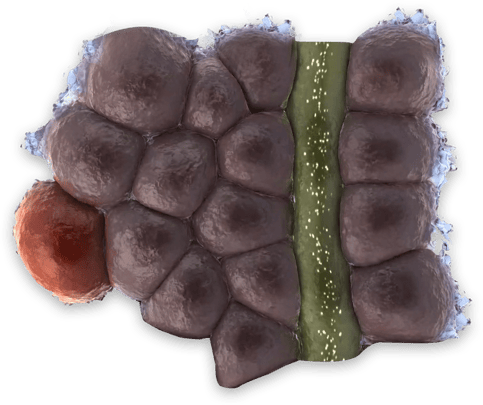
Liver Organoid Platform for Predictive Hepatotoxicity Assessment
Drug-induced liver injury (DILI) remains difficult to de-risk preclinically—especially when toxicity is metabolism-dependent or emerges after repeated exposure. Download the factsheet to see how metabolically competent human liver organoids and multiparametric live-cell profiling can help you detect early toxicity signals and generate mechanistic insight.
Just released — designed for drug discovery and safety teams who need human-relevant hepatotoxicity risk assessment.
download factsheetThe challenge
Why hepatotoxicity is still hard to predict in vitro
Many hepatotoxicity workflows still depend on immortalized hepatic cell lines or primary human hepatocytes (PHH). These approaches can miss clinically relevant liabilities:
- Limited metabolic competence in commonly used cell lines (e.g., low CYP activity)
- Rapid loss of metabolic function in PHH under conventional culture
- Short-term viability readouts that may miss early mechanistic disturbances
- Limited ability to model toxicity that arises after repeated or chronic exposure
Download the factsheet to learn:
- How a donor-diverse human liver organoid biobank supports safety assessment during preclinical development
- Evidence for hepatocyte-like identity and function, including transcriptional signatures and cytochrome P450 activity
- How multiparametric live-cell profiling improves sensitivity beyond viability-only assays
- How to interpret dose–response data in the context of clinically relevant exposure (Cmax-informed interpretation)
- Practical use cases across lead optimization, candidate selection, and mechanistic follow-up
What makes the platform different
Multiparametric, live-cell hepatotoxicity profiling for earlier signal detection
Single-endpoint viability assays may lack sensitivity for early-stage injury mechanisms. The platform enables simultaneous quantification of:
- Mitochondrial membrane potential (mitochondrial dysfunction)
- Oxidative stress / ROS
- Lipid accumulation
- Viability
This supports detection of mechanistic perturbations that can precede overt cytotoxicity—improving interpretability and decision-making.
Fit for your preclinical workflow
Where liver organoids add value
Use the liver organoid biobank and multiparametric profiling to:
- Identify hepatotoxic liabilities earlier in the development funnel
- Prioritize compounds using mechanistically informative endpoints beyond viability
- Support clinically relevant concentration testing
- Increase confidence in safety decisions using a metabolically competent, human-relevant system