
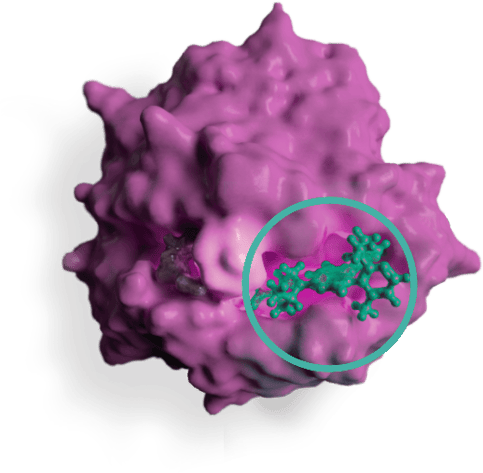
A closer look at challenges in KRASi development
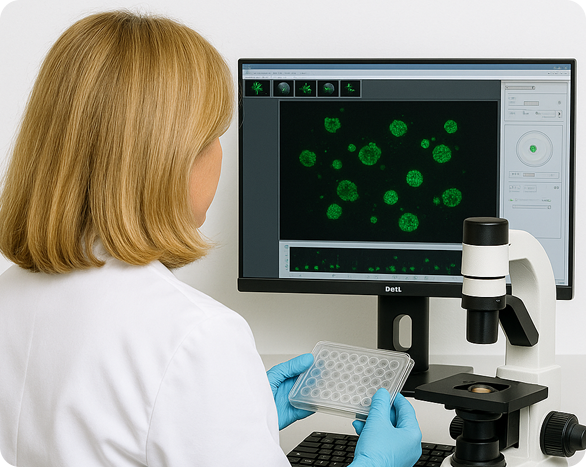
Despite advances with KRAS-targeted therapies, resistance remains a major challenge as tumors adapt through secondary mutations and pathway reactivation. Our PDO platform models both intrinsic and acquired resistance in a mutation- and tissue-specific context, preserving patient-derived molecular and phenotypic features for translationally relevant drug evaluation.
Using our CRC-derived PDO biobank, we tested MRTX1133, a selective KRAS-G12D inhibitor, and observed substantial heterogeneity, with some models showing sensitivity and others no response despite sharing the same mutation. By integrating multi-omics profiling, including single-cell RNA sequencing, our platform enables stratification of responders, identification of biomarkers, and design of rational drug combinations to guide therapy selection and indication expansion.
What you'll learn:
- Our protocol for modelling drug-tolerant and acquired-resistant states by stepwise drug exposure
- Comparative sensitivity profiles of KRAS-mutant PDOs to available G12C and G12D inhibitors
- Functional heterogeneity within and across KRAS mutation classes
- Preclinical data supporting KRAS/EGFR combination strategies
- Use of single-cell RNA sequencing to map resistance programs and discover biomarkers of response
Now enrolling for Pan-KRAS PDO Screen
Benchmark your inhibitor against daraxonrasib and get patient-relevant preclinical evidence.