

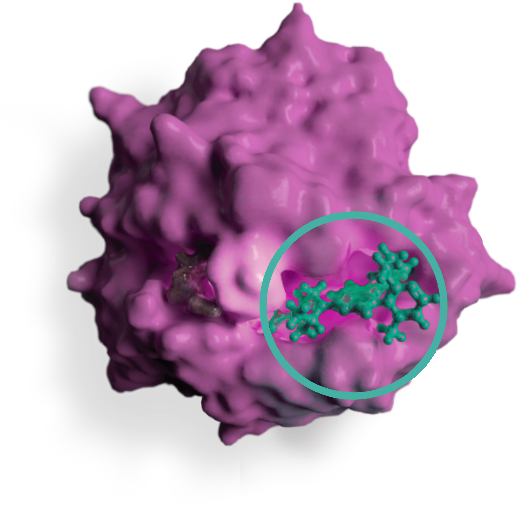
PAN-KRAS PDO Screen
Test the efficacy of your compound(s) in a panel of 25 patient-derived organoids representing colorectal, lung, and pancreatic cancer

Colorectal
cancer

Lung
cancer

Pancreatic
cancer

Ovarian
cancer
Benchmarked for response to Daraxonrasib
Our pan-KRAS PDO panel gives your next-generation inhibitor a defined bar to clear before the clinic. Discover where your compound matches, outperforms, or covers gaps daraxonrasib leaves behind. In a fast-crowding pan-RAS landscape, this head-to-head, patient-relevant benchmarking is what turns a differentiation claim into your defensible preclinical evidence.


EXPERT ANALYSIS
Multi-Selective RAS Inhibition: Clinical Validation and Preclinical Implications
"The Phase 3 RASolute 302 trial has established clinical proof of concept for multi-selective RAS inhibition. Daraxonrasib, an oral RAS(ON) multi-selective tri-complex inhibitor of the active GTP-bound state of mutant and wild-type RAS, nearly doubled median overall survival relative to standard-of-care chemotherapy in previously treated metastatic pancreatic ductal adenocarcinoma (13.2 versus 6.7 months), with concurrent improvement in progression-free survival. The trial enrolled 500 patients across 59 sites and included tumors carrying a broad range of RAS variants as well as tumors without an identified RAS mutation.
Two features of this result carry direct preclinical consequence. First, the agent addresses G12, G13, and Q61 variants as a class rather than a single allele, and survival benefit was observed irrespective of RAS mutation status. Second, the mechanism is state-dependent rather than pocket-dependent, distinguishing it from the switch-II pocket chemistry underlying approved G12C inhibitors.
HOW CAN WE HELP
For programs pursuing pan-KRAS, pan-RAS, or RAS(ON) mechanisms, the preclinical requirement is consequently breadth: demonstration of activity across the full allele spectrum, in multiple tumor indications, under standardized assay conditions permitting cross-model comparison. This is the design specification of our PAN-KRAS PDO Screen — a high-throughput platform of 25 PDOs spanning clinically relevant KRAS mutations across colorectal, pancreatic, and lung cancer, benchmarked for response to daraxonrasib, generating comparative efficacy data across indications from a single enrollment."
Yasmine Abouleila, PhD
Global Strategic Scientific BD Manager, HUB Organoids
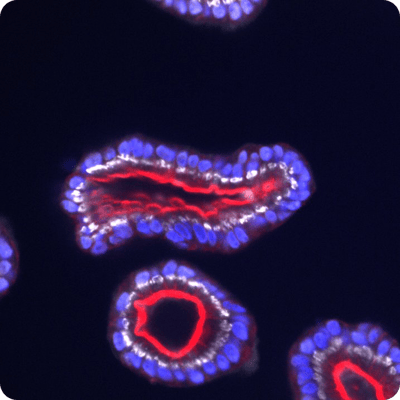
Panel features
- Representing pivotal KRAS mutants such as G12D, G12C, G12V, G13D and many others
- Benchmarked for response to daraxonrasib across multiple indications to help you guide your next-gen inhibitor and combination startegies
- Rigorously characterized, with readily available RNA or DNA sequencing data
- Diverse models encompassing both primary and metastatic tumors
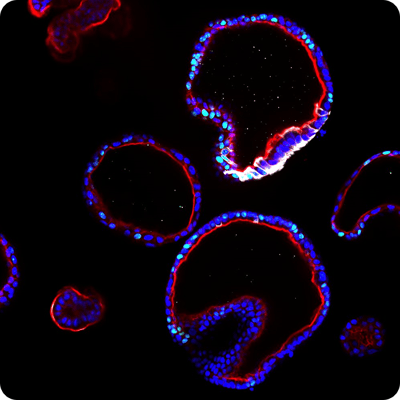
Advanced screening capabilities
- Direct measurement of cell viability with an image-based viability readout
- High-throughput 3D assay format
- Test as many compound(s) as you want
- No minimum number of models to enroll
- High-data quality with 10-point dose-response curves per compound
- Inclusive of IC50 determination and IC50 heatmap and synergy maps generation
Proven Impact
Our meticulously designed KRASmut panel was instrumental in developing the first-ever clinical candidate using organoid technology, targeting head & neck cancer
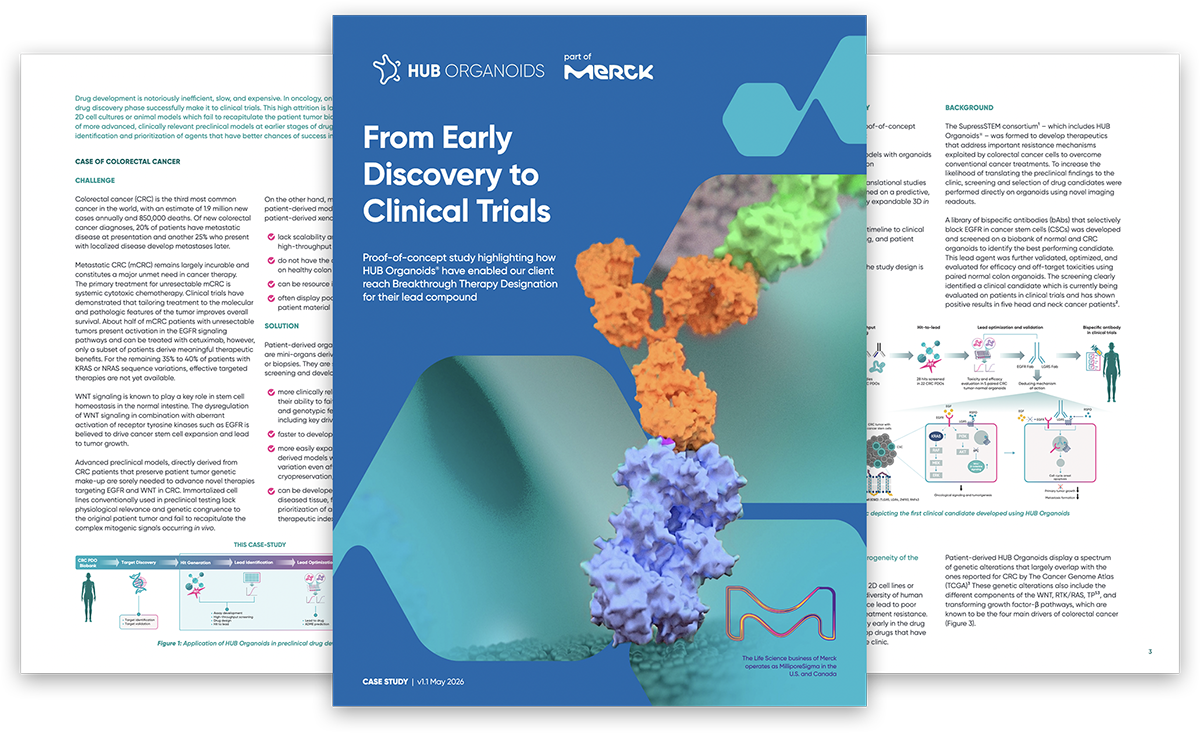
UNIQUE MODELS
Adagrasib and daraxonrasib induced resistant PDOs available to include in your screen
Overcome resistance before it emerges in the clinic

Accelerate your KRAS drug development with our comprehensive portfolio










therapy


biomarker assays


diagnostics partnering